Yes, CBD oil is legal in the UK: CBD itself is not a controlled drug, so CBD products can be bought and sold legally. The limits come from what else a product contains and how it is sold: THC and other controlled cannabinoids fall under the Misuse of Drugs Act 1971, and CBD sold as food needs novel food authorisation. Our CBD oils for people are cosmetics for use on the skin.
Key facts
- CBD
- Not controlled: "Pure CBD, as an isolated substance, is not controlled under the MDA 1971" (Home Office, as of October 2026)
- THC
- A Class B drug under the Misuse of Drugs Act 1971
- Trace THC in CBD products
- Allowed only if the product meets all three conditions of the "exempt product" definition, including no more than 1 mg of a controlled drug per component part
- CBD food and supplements
- Novel foods. As of October 2026 none is authorised in Great Britain; the FSA Board agreed in September 2026 to put the first three applications to ministers
- FSA intake advice
- Healthy adults should limit CBD from food to 10 mg a day (advice updated October 2023; it covers food)
- Hemp flowers and leaves
- Controlled parts of the plant; UK hemp licences cover seeds and fibre only (Home Office factsheet, updated December 2025)
- Our CBD oils
- Cosmetics for use on the skin, notified through the UK's SCPN service before sale
Is CBD oil legal in the UK?
Yes. The Home Office states that "pure CBD, as an isolated substance, is not controlled under the MDA 1971". The Misuse of Drugs Act 1971 lists cannabis, cannabis resin, cannabinol (CBN) and cannabinol derivatives, which include THC, as Class B drugs. CBD is not on that list.
In practice, the question is rarely about CBD itself. The Home Office says it is "nearly impossible" to extract CBD from the plant or make it synthetically without traces of controlled cannabinoids such as THC and THC-V. A CBD product that contains them counts as a Class B controlled drug unless it meets the exempt product definition explained below. If you're unsure about the difference between CBD and THC, read our guide to CBD vs THC.
Is there a legal THC limit for CBD oil in the UK?
Not as a percentage. The UK has no "0.2% THC" rule for finished products. The rule that matters is the definition of an "exempt product" in regulation 2 of the Misuse of Drugs Regulations 2001. A product that contains a controlled drug is exempt only if all three conditions are met:
- it is "not designed for administration of the controlled drug to a human being or animal";
- the controlled drug "cannot be recovered by readily applicable means or in a yield which constitutes a risk to health"; and
- "no one component part of the product or preparation contains more than one milligram of the controlled drug".
Three points are often misunderstood:
- The 1 mg is per container, not per dose. The Home Office says the unit of measure is the container, "such as a bottle of oil".
- Staying under 1 mg is not enough on its own. All three conditions must be met.
- Nobody certifies exempt products. The Home Office does not assess whether a product meets the definition; that is the seller's responsibility.
How is CBD regulated under UK law?
No single CBD law exists. Which rule applies depends on what the product contains and how it is sold:
| Product | Main rule | Who is responsible |
|---|---|---|
| Pure CBD (isolated) | Not controlled under the Misuse of Drugs Act 1971 | Home Office |
| CBD product with traces of THC or other controlled cannabinoids | Class B, unless it meets all three conditions of the exempt product definition | Home Office |
| CBD foods, drinks and food supplements | Novel food: authorisation needed; none authorised in Great Britain yet | Food Standards Agency, then ministers |
| CBD cosmetics (oils for the skin, creams, balms) | GB cosmetics rules: a UK Responsible Person, a safety assessment and SCPN notification before sale | Office for Product Safety and Standards (OPSS) |
| Hemp flowers and leaves | Controlled parts of the plant; not covered by hemp licences | Home Office |
| Hemp seeds and fibre | Grown under a Home Office industrial hemp licence from approved low-THC seed | Home Office |
Is CBD oil legal as a food supplement?
CBD sold as food, drinks or food supplements is a novel food in the UK and needs authorisation before it can be sold. The Food Standards Agency (FSA) keeps a public list of CBD food products linked to applications that are still being assessed. Being on the list does not mean a product is authorised, and the FSA says inclusion is "no guarantee that they will be authorised".
As of October 2026, no CBD food is authorised in Great Britain. In September 2026 the FSA Board was asked to agree that its recommendations on the first three applications, linked to about 3,000 products, could go to ministers in England and Wales, who make the final decision. The recommendations are based on a provisional acceptable daily intake of 10 mg.
How much CBD does the FSA say is safe?
The FSA advises that "healthy adults should limit their consumption of CBD from food to 10mg per day". It also advises against CBD for people under 18, people taking any medication, and anyone trying to conceive, pregnant or breastfeeding, unless under medical direction. This advice covers CBD consumed as food and applies to England, Wales and Northern Ireland. Our guide to CBD side effects and CBD and medication explain the background.
Why are our CBD oils sold as cosmetics?
Our CBD oils for people are made and labelled for use on the skin. In Great Britain, a cosmetic can only be sold once its Responsible Person has notified it to the Office for Product Safety and Standards through the Submit Cosmetic Product Notification (SCPN) service, and holds a Product Information File with a safety report. Each of our CBD oils is notified for topical use. Our pet oils are labelled for external use on animals. None of our products is sold as a food or a food supplement, and our labels don't give directions for taking them by mouth. See registered, compliant and legal products for the registrations.
Every batch is tested in Switzerland, and the THC result is printed to two decimals on its certificate. You can check any batch on our test results page; our guide on how to read a certificate of analysis shows what to look for.
Is CBD flower legal in the UK?
No. The Home Office treats the leaves and flowers of the cannabis plant, including hemp, as controlled parts. UK industrial hemp licences cover only "seeds and fibre/ mature stalk", do not allow the use of "green" material, and applications to make CBD oils from controlled parts of the plant "will not be considered" under that scheme. We don't sell CBD flowers in the UK. For the botanical background, see cannabis, marijuana and hemp: the difference.
Can I use CBD and still drive or pass a work drug test?
CBD itself is not what tests look for: roadside and workplace tests look for THC. The UK has a legal limit for THC in the blood when driving. Our guide to CBD, drug tests and driving in the UK explains the limits and how to choose a THC-free product if you are tested.
From our production
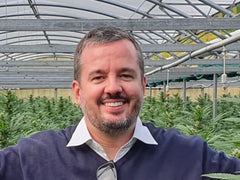
Many customers still believe CBD and hemp products are illegal, and many journalists don't know the difference between cannabis and hemp. We started selling in each market as soon as our legal advisers confirmed we could, and we test every batch in Switzerland.
— Robin Roy Krigslund-Hansen, co-founder and CEO
Frequently asked questions
Is CBD oil legal in the UK in 2026?
Yes. The Home Office states that pure CBD is not controlled under the Misuse of Drugs Act 1971. THC and other controlled cannabinoids are Class B drugs, so a CBD product containing traces of them must meet the exempt product definition, and CBD sold as food needs novel food authorisation.
What is the legal THC limit for CBD oil in the UK?
There is no percentage limit. A product with traces of THC must meet all three conditions of the exempt product definition in the Misuse of Drugs Regulations 2001, one of which is no more than 1 mg of a controlled drug per component part, which the Home Office says is the container, such as a bottle of oil.
Is cannabis oil legal in the UK?
It depends on what it contains. Cannabis oil with THC is a Class B drug under the Misuse of Drugs Act 1971 unless it is prescribed. The NHS says specific cannabis-based products are available on prescription as medicinal cannabis, but very few people get one. A CBD oil that meets the rules on this page can be bought legally.
Is CBD flower legal in the UK?
No. The Home Office treats hemp leaves and flowers as controlled parts of the plant. UK hemp licences cover only seeds and fibre or mature stalk.
How much CBD does the FSA recommend?
The Food Standards Agency advises healthy adults to limit CBD from food to 10 mg a day, and advises people under 18, people taking medication, and anyone trying to conceive, pregnant or breastfeeding not to use it unless under medical direction. The advice covers CBD consumed as food.
Has the FSA authorised any CBD products?
Not as of October 2026. In September 2026 the FSA Board considered recommending the first three CBD novel food applications to ministers in England and Wales, who make the final decision. Products on the FSA public list are not authorised.
Are Formula Swiss CBD oils legal in the UK?
Yes. Our CBD oils for people are cosmetics for use on the skin, notified through the UK's SCPN service, and our pet oils are labelled for external use. Every batch is tested in Switzerland, and the certificates are on our test results page.
Related guides
This page is general information about UK rules, not legal advice. Formula Swiss CBD oils are sold as cosmetics for use on the skin. They are not food supplements or medicines and are not intended to diagnose, treat, cure or prevent any disease.
Last reviewed:
Sources
- Home Office. Drug licensing factsheet: cannabis, CBD and other cannabinoids (updated 3 October 2024). gov.uk
- Misuse of Drugs Act 1971, Schedule 2, Part II (Class B drugs). legislation.gov.uk
- Misuse of Drugs Regulations 2001, regulation 2 ("exempt product"). legislation.gov.uk
- Home Office. Industrial hemp licensing factsheet (updated 18 December 2025). gov.uk
- Food Standards Agency. Cannabidiol (CBD) (precautionary advice updated October 2023). gov.uk
- Food Standards Agency. CBD novel food applications: recommendations to ministers on first authorisations (Board meeting, September 2026). gov.uk
- Office for Product Safety and Standards. Making cosmetic products available to consumers in Great Britain. gov.uk
- NHS. Medical cannabis (and cannabis oils). nhs.uk